How Africa came into my life
I first set foot in Africa at twenty-six. A short trip, almost by accident — a friend, a flight, a gap in my diary. I had read Karen Blixen, I had watched Out of Africa far too many times for my age, and I expected to be disappointed. I was not. I came home with a strange certainty: there was something out there that could be found nowhere else.
In the years that followed, I went back whenever I could. First as a traveller, then accompanying friends who wanted "the same thing, but without having to find it on their own". Word of mouth soon did its work. Around 2003, I realised it had become my profession — without my ever quite having decided so.
Today I spend roughly thirty weeks a year in the field. I have travelled seven countries in depth. I know people, roads, campsites, hours of the day. Above all, I know the limits of what I can promise, and that is probably what took me the longest to learn.
Why this kind of guiding, and not an agency
When I came back from my first journeys, I saw how the agencies were selling Africa. "Tours", "packages", "best of" lists. I could not recognise the lands I had crossed in those brochures.
That was when I understood something was missing. Not another agency — someone who truly knows, who is present, who chooses for you as he would choose for himself. I decided not to sell journeys. I decided to accompany people.
In practice, this means I am there, from the first day to the last. I handle the logistics, the transfers, the choice of providers, the key moments, the silences. You have nothing to attend to but being present. A single point of contact, a single chain of decision, no opaque intermediary between you and the field.
My philosophy of the living world
In Africa, the animal is not a show. It is at home — we are the guests. That distinction changes everything.
I refuse the practices that turn observation into a photographic hunt. No racing to catch up with a cheetah, no spotlight trained on a leopard at night, no drones, no bait. If we don't see the animal today, we don't see it. That is all. I would rather a morning without a sighting than a morning rushed. Patience is our main tool.
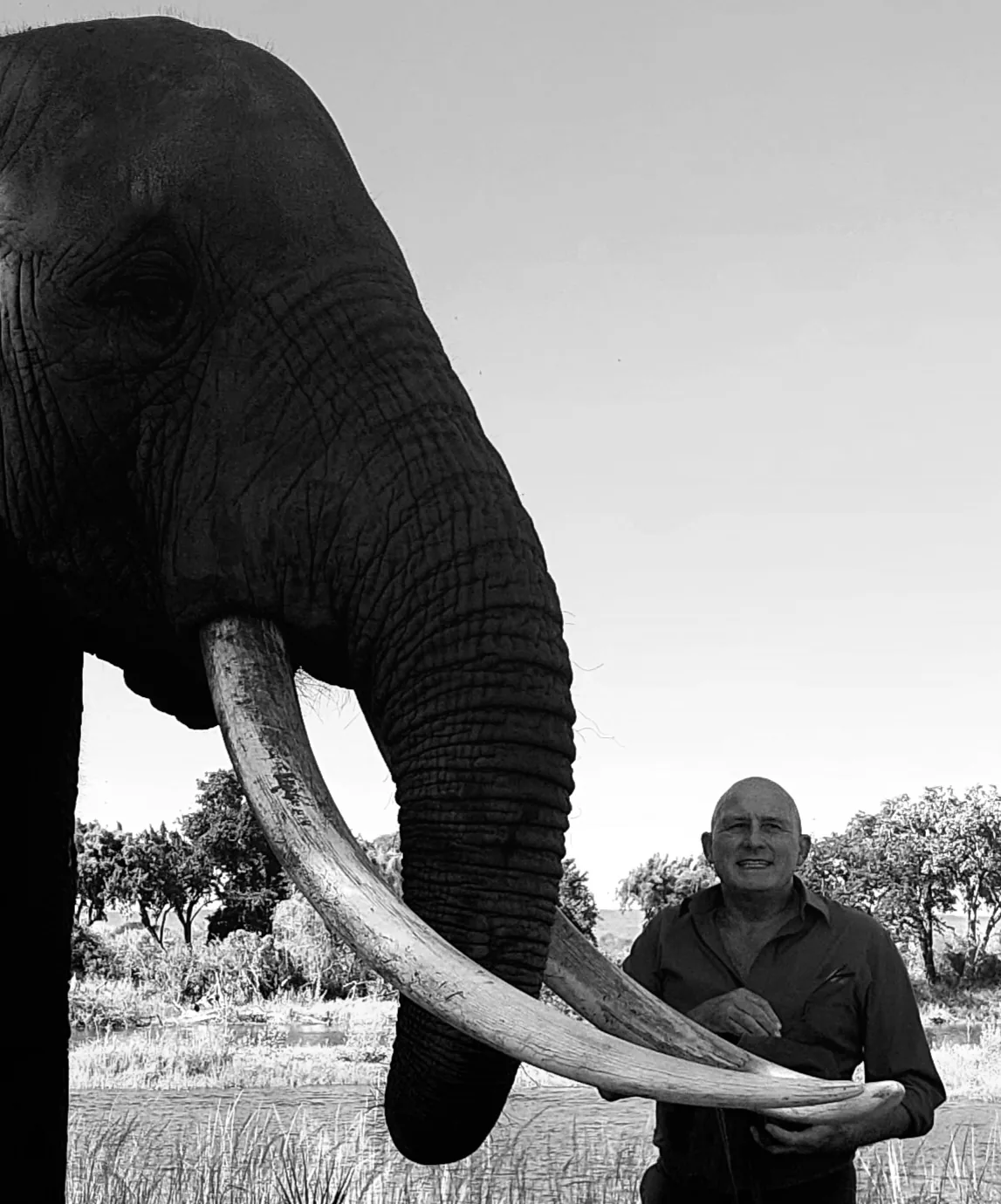
Out in the field, my rule is simple: engine off, voices low, distance respected. It is in silence and in waiting that the things you remember come to pass — an elephant walking by ten metres away without seeing us, a lioness lying down in the shade of the vehicle, a kingfisher diving three times in a row into the Rufiji. None of these images can be summoned to order.
I am also committed to a partner association working for coexistence between local communities and the great wildlife. It is a discipline I owe as much to my travellers as to the lands that welcome us.
What I will not do
I do not take groups of more than six people. Beyond that, you can no longer hear anything — neither the land, nor the people. The rule holds, without exception.
I do not work with the lodges that open their doors to everyone. My providers are chosen one by one, and I know them personally. The chain stays short, legible, with no opaque intermediary.
I do not promise the "big five". Africa is not a theme park, and a journey measured by a tally is a journey already lost.
I do not reply within five minutes with a generic email. If I write to you, it is I who writes. It sometimes takes a few hours longer — that is the price of the answer being mine, rather than that of an assistant or a pre-formatted model.
Nor do I have an "from" price with no context. The prices I quote are net, in euros, to a European account, with no fluctuation or uncertain intermediation. You will know exactly what you are paying, and to whom.
Out in the field
Active since 2003. Several hundred travellers guided, always in small groups. Seven countries travelled in depth. Around thirty weeks a year spent in Africa. Six people maximum, never more. Member of the [to be specified] association for the protection of the great predators and coexistence with local communities.